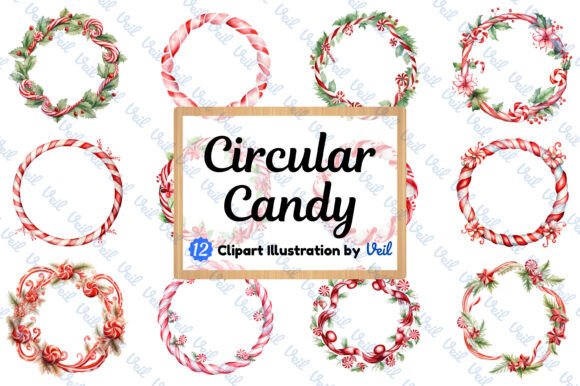
Review: Circular Christmas Candy Clipart for Embroidery
As a designer who has spent countless hours digitizing and testing machine embroidery designs, I have learned that not every graphic translates well to thread. The gap between a crisp digital illustration and a stitched finished product is where many projects fail. Recently, I evaluated the Circular Christmas Candy Clipart to determine its viability for real-world commercial and personal use. This review is not just about aesthetics; it is about practical application for embroidery designers, Etsy sellers, and craft business owners who need reliable assets.
First Impressions and Visual Personality
The first thing that strikes you about the Circular Christmas Candy Clipart is its balanced composition. In the world of Illustrations, circular layouts are particularly valuable because they offer a self-contained visual unit. This makes them ideal for central placement on garments or accessories. The mood is inherently festive but restrained, avoiding the chaotic clutter often found in holiday graphics. For an embroidery project, this clarity is crucial. When we translate these lines into satin stitch or fill stitch, complex overlaps can cause thread breaks or unsightly bunching. This design’s clean separation of elements suggests it was created with an awareness of how shapes interact, which is a promising sign for digitizers.
The visual personality leans towards classic holiday charm. It does not rely on trendy, fleeting styles, which means products made with this design will have longevity. For small shop owners, this is a key consideration. You want a design that sells not just this December, but potentially for years as part of your core seasonal collection. The layout allows for easy scaling, provided you respect the limits of your hoop size and stitch density.
Real-World Application: The Custom Tote Bag Test
To truly understand the value of a design asset, you must imagine it on a physical product. I visualized using the Circular Christmas Candy Clipart on a heavy canvas tote bag. This is a popular item for holiday gift-giving and boutique merchandise. The circular shape sits naturally in the center of the bag, drawing the eye without competing with the handles or seams. Because the design is contained, it avoids the edge-distortion issues that plague rectangular or wide-aspect graphics on curved surfaces.
If I were producing this for a client, I would consider how the thread colors interact with the fabric texture. Canvas has a visible weave, so a design with too much fine detail might get lost. However, this clipart’s bold structural lines hold up well. By using a contrasting thread color, such as a deep red or forest green against a natural beige canvas, the design pops. For a sweatshirt embroidery project, the same principles apply. The soft texture of fleece or cotton blend requires a design that is not overly dense, ensuring the garment remains flexible and comfortable to wear.
Versatility Across Product Lines
Beyond tote bags and sweatshirts, this design shows promise for several other applications:
- Embroidered Patches: The circular border makes it an excellent candidate for iron-on or sew-on patches. These are high-margin items for craft fairs and online stores.
- Baby Embroidery: Simplified versions of this design could work beautifully on baby blankets or onesies, provided the stitch count is reduced for delicate fabrics.
- Kitchen Textiles: Imagine this stitched onto tea towels or aprons. The holiday theme fits perfectly with seasonal home decor trends.
- Caps and Hats: While curved surfaces are tricky, a simplified version of this circular motif can sit nicely on the front panel of a dad hat or beanie.
Technical Considerations for Stitching
While the visual appeal is strong, technical execution is where the rubber meets the road. As an experienced reviewer, I must highlight areas where caution is needed. The term "clipart" often implies vector graphics intended for print, not necessarily for embroidery. Therefore, if you are purchasing this as a digital embroidery file, you must verify the stitch density. High-density areas in the candy details could lead to puckering, especially on thin fabric or stretchy materials like jersey knits.
When working with the Circular Christmas Candy Clipart, always test on scrap fabric first. This is non-negotiable for professional results. Check how the running stitch outlines hold up against the fill stitch interiors. If the design includes tiny lettering or intricate corners, ensure your machine can handle the precision required. On dark fabric, you may need to adjust your underlay stitches to prevent the background color from showing through the top threads. Using a proper stabilizer is essential; for hats or caps, a stiff cut-away stabilizer will maintain the shape of the circular design, while a tear-away might suffice for stable woven fabrics like tote bags.
Navigating Fabric and Hoop Constraints
One common mistake makers make is forcing a design into a hoop size that is too small. Always confirm hoop size compatibility before starting. If the design is large, you may need to scale it down, but be wary of losing detail. Conversely, scaling up too much can expose gaps in the stitching. For textured fabrics, such as terry cloth towels, the design needs enough saturation to cover the loops of the towel. A light, airy stitch pattern will look sparse and unprofessional on such materials.
Additionally, consider the washing instructions for the finished product. Holiday embroidery often ends up on items that are used frequently, like aprons or children's clothing. Dense stitch areas can become stiff after multiple washes. Balancing aesthetic appeal with durability is part of the designer’s job. If you are creating a personalized gift, you want the recipient to enjoy it for seasons to come, not just display it once.
Commercial Value and Brand Consistency
For Etsy sellers and creative entrepreneurs, the choice of design assets directly impacts brand perception. Using high-quality, well-balanced graphics like the Circular Christmas Candy Clipart enhances customer trust. It signals professionalism. When customers see clean, well-executed embroidery, they are more likely to engage with your brand and return for future purchases. This design supports brand consistency because its classic style can be adapted to various color palettes without losing its identity.
Moreover, this type of Illustrations asset is versatile for marketing. You can use the original digital file to create printable mockups for your online listings. Showing a realistic preview of the design on a sweatshirt or tote bag helps buyers visualize the final product, increasing conversion rates. However, always confirm licensing terms before selling finished items or digital products. Commercial embroidery rights vary, and protecting your business legally is as important as the creative process.
Final Verdict for Makers and Designers
The Circular Christmas Candy Clipart is a strong contender for holiday collections. Its circular format offers versatility, and its visual clarity translates well to thread when handled correctly. It is not a plug-and-play solution for every fabric type, but with proper testing and attention to stitch density, it can elevate handmade products. Whether you are decorating custom apparel, creating embroidered patches, or designing boutique merchandise, this asset provides a solid foundation. Remember to check thread color contrast, use appropriate stabilizers, and respect the limitations of your equipment. By treating this design with the technical respect it deserves, you can create finished products that are both beautiful and durable, satisfying both your creative standards and your customers' expectations.