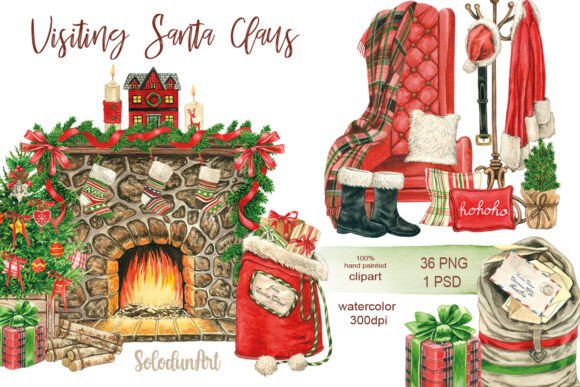
Christmas Interior Clipart: Illustrations Review
As a graphic designer who has spent over a decade refining brand identities and crafting seasonal campaigns, I approach every new graphic design asset with a critical eye. It is not enough for an image to simply be festive; it must serve a strategic purpose within a broader visual narrative. Recently, I evaluated a collection of Christmas Interior Clipart for a potential client project involving a boutique home goods brand. The goal was to determine if these assets could elevate their holiday marketing without compromising the sophisticated aesthetic they have built over years of small business branding.
The first impression of this collection is one of warmth and curated nostalgia. Unlike the chaotic, overly saturated graphics often found in the creative marketplace, these Illustrations possess a restrained elegance. The lines are clean, suggesting a modern vector origin, yet the subject matter evokes the cozy, lived-in feeling of a traditional holiday home. This duality makes the asset versatile. It does not scream "discount sale"; instead, it whispers "inviting atmosphere." For a designer, this subtle emotional cue is invaluable. It allows us to build trust with the audience by aligning the visual mood with the premium nature of the client’s products.
Integrating Assets into Real Client Projects
When considering how Christmas Interior Clipart performs in real-world scenarios, we must look beyond simple decoration. In my review, I tested these images across various mediums to gauge their flexibility. For packaging design, the clipart works exceptionally well as a secondary element. Placed subtly on a kraft paper box or a minimalist gift tag, it adds a layer of thematic relevance without overwhelming the logo design. The balance between the intricate details of the interior scenes and the negative space around them supports a strong visual hierarchy, ensuring that the brand name remains the primary focal point.
In the realm of social media graphics, these assets shine. I envisioned using them for Instagram carousels and Pinterest pins promoting a winter collection. The detailed nature of the interiors provides ample visual interest, encouraging users to stop scrolling. When paired with a clean sans serif font for headlines and a delicate script font for accents, the composition feels contemporary yet festive. This is crucial for marketing visuals that need to stand out in a crowded feed during the high-volume holiday season. Furthermore, for Canva template creators, these elements offer a plug-and-play solution for users who lack advanced design skills but desire a professional look.
Best Use Cases for Maximum Impact
Through my testing, I identified specific areas where Christmas Interior Clipart delivers the highest return on investment. These assets are ideal for large layout areas where they can breathe. Hero graphics on a website homepage or the main visual of an email newsletter benefit from the storytelling aspect of an interior scene. They set the stage for the user experience. Additionally, they are perfect for printable design products such as wall art or greeting cards. The resolution and detail hold up well in print, provided the source file is high-quality.
- Product Mockups: Use the clipart to create lifestyle contexts for digital products, enhancing perceived value.
- Sticker Design: The clear outlines make these suitable for die-cut stickers, a popular item for Etsy product sellers.
- Editorial Design: Ideal for blog headers or magazine layouts discussing holiday decor trends.
- Sublimation Design: Works well on mugs and tote bags where a larger graphic area is available.
Navigating Limitations and Design Constraints
While the aesthetic appeal is strong, a professional designer must also recognize where Christmas Interior Clipart should be used with caution. These illustrations are detailed. Consequently, they do not perform well at very small sizes, such as favicons or tiny social media profile icons. The intricacies blur, losing their charm and potentially looking like visual noise. Similarly, in crowded layouts where multiple elements compete for attention, these clips can overwhelm the viewer. They require space to be effective.
Another consideration is brand consistency. For corporate clients with a strictly minimalist or industrial brand identity, these cozy interior scenes might feel disjointed. They are best suited for brands that embrace warmth, tradition, or handmade qualities. If you are working on a project for a tech startup or a financial institution, these Illustrations may undermine the desired tone of efficiency and sterility. Always align the asset with the core values of the brand before integration.
Practical Designer Notes for Commercial Use
Before finalizing any commercial design project, I follow a rigorous checklist to ensure quality and legal safety. First, always verify the commercial license. Just because an asset is downloadable does not mean it is free for client work. Ensure the terms allow for use in print-on-demand products if you are creating physical goods for sale.
Technically, test the files in black and white. This reveals the strength of the line work and contrast. If the image relies solely on color to define its shapes, it may not reproduce well on monochrome printers or low-ink settings. Check the PNG design transparency to ensure there are no jagged edges or white halos around the illustrations. If SVG design files are included, open them in vector software to confirm that the paths are clean and editable. This allows for color customization to match specific brand palettes.
Typography pairing is another critical step. I recommend testing the clipart against various font styles. A bold display font can anchor the whimsical nature of the interior scenes, while a handwritten font can enhance the personal, handmade feel. Avoid overly decorative fonts that clash with the details in the illustration. The goal is harmony, not competition.
- Preview the asset on both light and dark backgrounds to check visibility.
- Inspect the file formats; prefer vector for scalability and PNG for web use.
- Compare the style with existing brand assets to ensure cohesion.
- Test print quality on the intended material, whether paper, fabric, or ceramic.
In conclusion, Christmas Interior Clipart is a potent tool in the designer’s arsenal when used with intention. It bridges the gap between professional polish and seasonal warmth. For handmade business owners, digital sellers, and marketers, it offers a way to create emotionally resonant design assets that engage audiences. By respecting its limitations and leveraging its strengths in appropriate contexts, you can transform a simple illustration into a cornerstone of a successful holiday campaign. The key lies in thoughtful integration, ensuring that every element serves the broader story of the brand.